Since childhood, Noa has lived in a world filled with the voices of the dead... or so she believes. Her family, however, provides a much grimmer explanation: these are not spirits, but dangerous hallucinations that require aggressive treatment before it is too late.
You see, Noa’s mother—once a nurturing figure—became the family’s greatest source of fear when those same "voices" turned her violent. The cracks in the family foundation deepened into canyons after their mother’s instability led to a brutal attack on Noa’s younger brother, John.
After years of self-isolation and confinement at home, Noa hoped the silence would finally take hold. That hope shattered with the murder of Linda Lauren. Unlike the vague whispers of her past, Linda’s presence is visceral. She doesn’t just speak; she forces Noa to witness the raw, terrifying reality of her final moments, pleading for justice.
Caught between a supernatural plea and the fear of her own genetics, Noa’s first instinct is self-preservation. She seeks medical help, desperate to prove that Linda is merely a symptom of a breaking mind. But the barrier between Noa's head and the real world collapses when she sees the news: Linda Lauren is a real victim, murdered exactly as the "hallucination" described.
If Linda is real, Noa is the only witness to a cold-blooded killer. But if Linda is a hallucination, Noa’s mind has reached a level of sophistication that mirrors her mother’s descent. Is she a medium destined to bring justice, or is she a ticking time bomb whose "visions" are getting dangerously out of control?
Phantom Whisper's Characters:
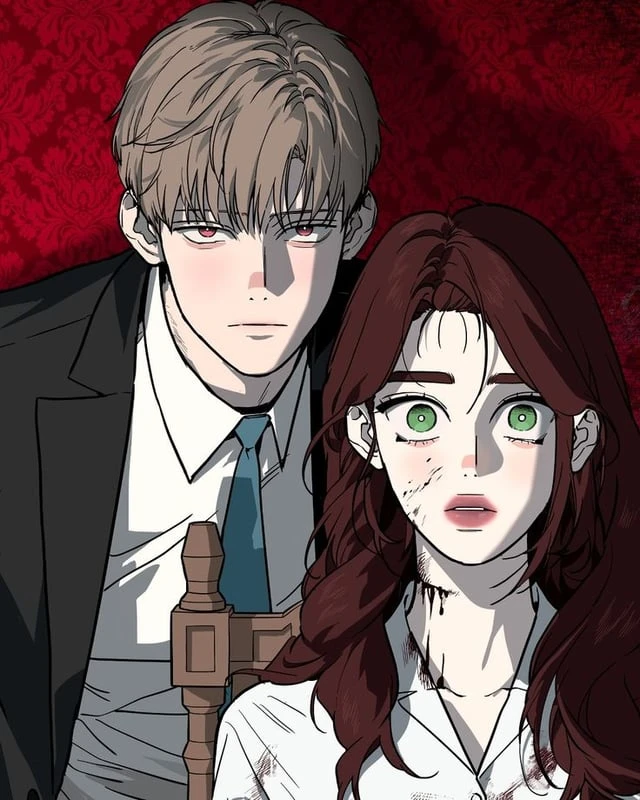
Noa
The protagonist, a young woman caught between what she perceives as a supernatural gift and what her family defines as a hereditary mental illness. She lives in constant fear of losing her sanity and repeating her mother’s violent history.
Linda Lauren
The spirit of the murdered woman. Her appearance is the story's catalyst.
John
Noa’s younger brother. He is the living reminder of the family trauma, having been the target of his mother’s aggression in the past. Their relationship is somewhat ambiguous; while he cares for her, his actions can sometimes be quite extreme.
Sarah
John’s wife. Although she tries to be the rational pillar of the house, her maternal instinct keeps her constantly on guard.
Lord Meyers
Noa and John’s father. He is a cold and dominant authority figure who, traumatized by what happened to his wife, imposes extreme and cruel treatments on Noa.
Denny
The Son of Sarah and John and Noa’s nephew.
Dr. Rooney
A new psychiatrist in charge of Noa’s case.
Cain
An enigmatic character who possesses an unusual knowledge of the voices and the spiritual world.
When I first started Phantom Whispers, I was intrigued by the premise, but initially, I found myself feeling a bit bored. This lasted until Chapter 28, which delivered one of the biggest twists I’ve read in a long time. Looking back, why was I so close to dropping the series?
The answer has to do with Noa’s confinement, since the story felt limited in scope. I couldn't see how she could possibly resolve a murder case when her world was restricted to her home and Dr. Rooney’s office—a doctor who didn’t even believe her and seemed intent on incriminating her. At times, it felt more like a soap opera than a thriller; we cycled through the same few characters repeatedly, and Noa’s deteriorating mental state began to overshadow what I thought was the main plot. Furthermore, the ghosts weren't particularly "creepy" at first. When I read horror, I expect to be genuinely surprised or even traumatized, and the early chapters felt a bit tame. While the pacing might feel tedious at the start, stick with it—once it picks up, it does so in a spectacular way.
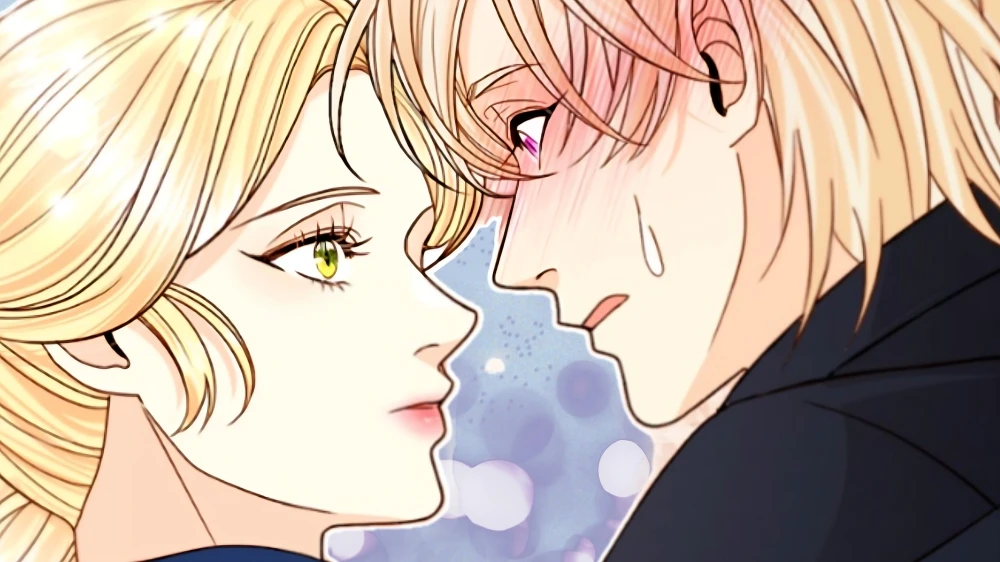
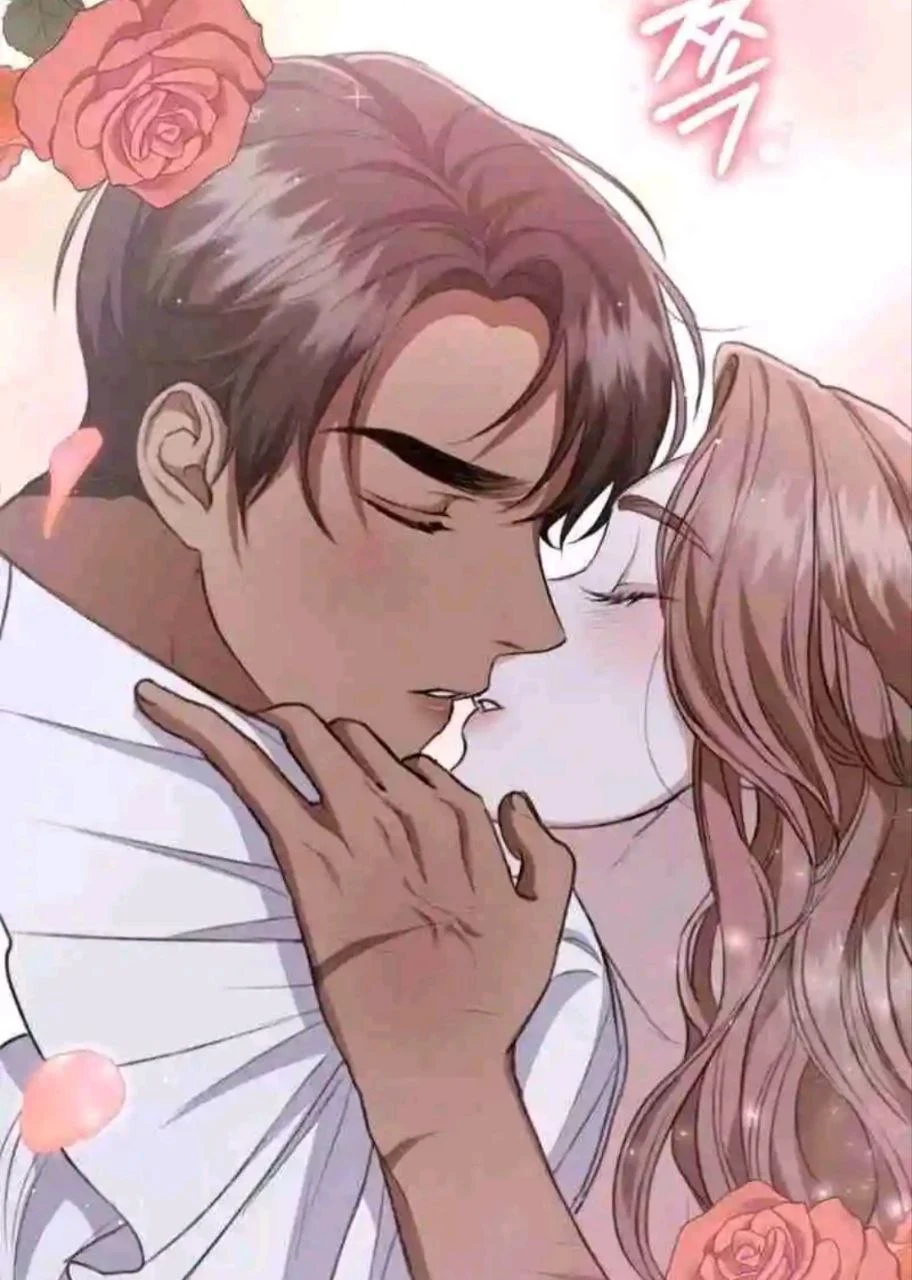
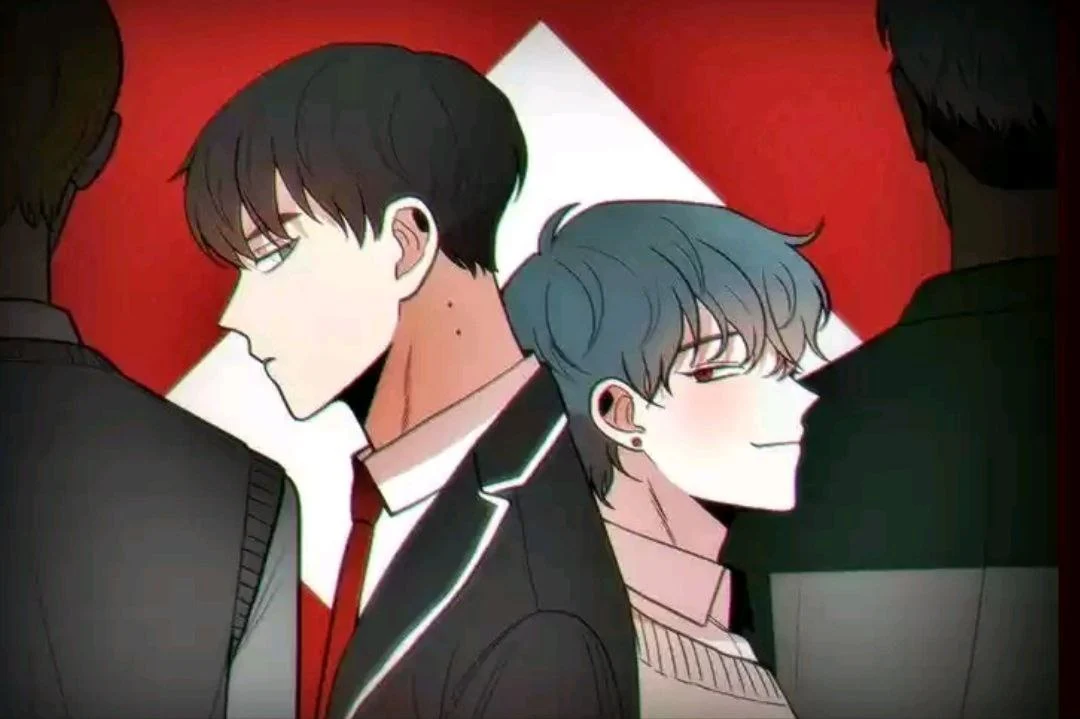
The art is gorgeous and remains one of the primary reasons I kept reading. I haven't seen a manhwa with this specific aesthetic before. The figures are tall and statuesque, yet there is a "roundness" to the character designs that I adore. I personally prefer softer, rounded features over sharp or pointy lines, so I knew from the start that the art style alone made it worth my time.
What is truly genius about the series is the use of perspective. While we primarily follow Noa, the story shifts into a third-person, almost omniscient POV that gives us deeper insight into the supporting cast. Because of Noa’s past and her vulnerability, she is the definition of an unreliable narrator. She has been conditioned to believe she is "crazy," which makes the reader doubt Linda’s presence entirely. However, when the POV shifts, we see people for who they truly are. A character you think you know can be completely redefined a few chapters later. The devil is in the details, and without full context, you can’t truly understand the stakes. I appreciate how the story uses these multiple perspectives to show that in this world, nothing is simply black and white.
The Cain, Abel, and Ark Connection
The biblical parallels in Phantom Whispers are too striking to ignore, especially regarding the duality between the male lead, Cain, and the mysterious serial killer. By naming the protagonist after the world’s first murderer, the author immediately marks him with a "villainous" legacy—a choice that feels intentional given his unsettling design, from his piercing red eyes to his "psychotic" smiles and the literal aura of death that follows him. From the get-go, we are conditioned to view "Cain" as the threat; yet, he doesn't seem to be a murderer, but rather someone helping those beyond the grave. If the killer is indeed the "Abel" to his "Cain," it suggests a brilliant moral inversion where the "favored" or "righteous" brother is actually the monster, and the "exile" is the only one capable of delivering justice.
The mention of the Ark (or "Arc") further cements this religious subtext, positioning Cain’s origins within what appears to be an elite, perhaps even fanatical, cult of mediums. The name itself is telling: just as Noah’s Ark was humanity’s last hope before the flood, this organization likely views itself as a sanctuary for those with "the gift." This "Cain and Abel" dynamic, combined with the fact that the killer shares Cain’s physical traits, hints at a "twin" or "shadow" relationship where the two men represent two sides of the same supernatural coin. Noa is trapped in the middle, forced to decide if her ally is a ticking time bomb or if the "evil" associated with his name is merely a mask for a man who was cast out for seeing a truth the Ark wanted to hide.
The Symbiosis of Noa and Cain
Even the name Noa seems to directly evoke the biblical figure of Noah, suggesting that she is not merely a random victim, but the key to navigating or perhaps even leading this "Ark." This raises a fascinating question: will Cain and Noa combine their forces to dismantle this institution from the inside, or are we witnessing another symbolic duality?
Their connection is most revealing through their complementary gifts. While Noa is tormented by hearing the voices of the dead without being able to put a face to them, Cain possesses the unsettling ability to see their physical presences without necessarily understanding their laments. Separately, they are incomplete and vulnerable to their own distorted perceptions; however, by uniting, they form a perfect and absolute medium.
This synergy suggests that the Ark may have intentionally tried to keep them apart, or that their union represents the ultimate threat to the cult. Together, they cease to be "mentally ill" or "exiles" and transform into an entity capable of perceiving the full truth behind Abel’s crimes and the secrets the Ark has tried to bury under the weight of tradition and fanaticism.
Opinion About Phantom Whispers
I know I might be rambling at this point, but I just see so much potential in all of it! There are so many layers to peel back, and the connections are endless. Honestly, if you haven't started this manhwa yet, I highly recommend it—stick through the early chapters, because the payoff is absolutely worth it.