What if you could reset your life?
Dongtae is at the absolute bottom of his school's social ladder: short, unattractive, and a constant victim of bullying. However, his fate changes drastically with the arrival of a new student, Tae-bin, and the discovery of a mysterious object: a DICE. By rolling it, Dongtae becomes a "Dicer," gaining the ability to improve his physical stats and appearance through a quest system similar to a video game. But at what cost does this power come?
Dice's Characters
Dongtae
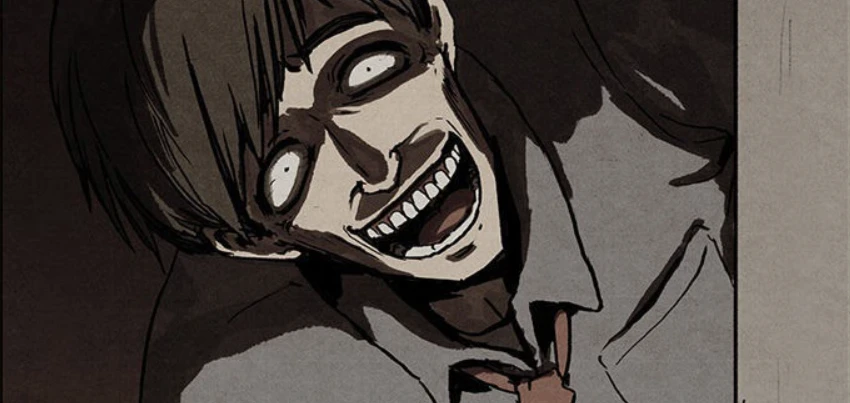
He is short, unattractive, and carries the psychological scars of chronic bullying. Upon becoming a Dicer, his physical evolution is ""radical."" However, his internal growth lags far behind his physical stats.
Taebin
The mysterious transfer student who introduces the Dice to the school. He is the "Alpha" archetype: calm, effortlessly handsome, and highly capable.
Eunju (Eunjoo)
Eunju is the school’s "Idol"—admired for her natural beauty and, more importantly, her unwavering kindness.
X
The mastermind behind the games.
A Game of Social Survival
The dynamics of the first season revolve around Dongtae's transformation and the introduction of Eunju, the girl he loves. And, yes, this plot point is as cliché as it gets: Eunju starts dating the handsome new guy while Dongtae is stuck being the 'ugly introvert.'
Dongtae: The Biggest Simp
Our main protagonist serves as a frustrating subversion of the "likable" hero; he lacks the pragmatic common sense typically expected of a maturing lead. Instead, he operates with a debilitating level of romantic myopia. His obsessive devotion to Eunju triggers repeated lapses in judgment that alienate the reader—primarily because he is playing a high-stakes game where rationality is the literal currency for survival.
By prioritizing a one-sided romantic ideal over strategic self-preservation, Dongtae becomes a liability within his own story. This lack of agency makes him a difficult lead to "root for," as I often feel I'm witnessing a train wreck driven by misplaced sentimentality rather than a hero's journey.
The Art: Does its Job... Kind of
I’m not a huge fan of the art style, but in terms of storytelling, I think it gets the job done—mostly. I’m still laughing a bit at how 'dramatic' the protagonist's physical transformation is supposed to be. However, for a story like this, I don't think the art should be judged as a standalone component; rather, it's just one part of a much larger, more complex whole.
A Critique of Superficiality
How would we treat one another if self-editing were possible? Seeing characters trade their humanity for 'Beauty' or 'Agility' stats is chilling, particularly because the cast consists of teenagers. Their heightened vulnerability to social commentary makes their desperate, drastic choices feel all the more grounded and tragic.
The Die as a Metaphor for Fate
The concept of the DICE works as a perfect metaphor for inequality. In the real world, we are born with 'dice' that have already been rolled—our genetics, our family, and our luck. The series asks: If you could roll those dice again, would you still be yourself? Dongtae begins to appreciate his new life, but soon discovers that the quest system forces him to hurt others, posing an ethical dilemma where the 'rewards' are weighed against things far more important: his humanity and empathy.
Final Thoughts on DICE
What kept me reading were the challenges—how comical they seem at first versus how they progressively get darker. I think there is so much potential in these quests to drive the storytelling forward. If an interesting world and an immersive premise are enough to get you hooked, I say go for it. Just keep in mind that the main characters themselves aren't exactly the most compelling part of the journey.