A Deep Dive into The Remarried Empress
Imagine you're married or have a significant other, and suddenly your partner helps a stranger on the street. You think, "Well, yes, of course. It's only natural to be so helpful to someone in need." But what happens when that helpless person becomes a mistress to said partner, essentially casting you aside from your normal life and your duties—not only those tied to your husband but also to your home, and, essentially, the entire empire?
That scenario defines the life of our main female character, Empress Navier Ellie Trovi, who has just been "served divorce papers" by the Emperor. He intends to give her irreplaceable position to someone with no education, no preparation, and no long-term beneficial qualities.
While beauty and adorableness can take a person far, those qualities don't cover even half the road necessary to govern an entire kingdom. The Emperor's choice to prioritize novelty over competence completely disregards the political stability Navier represents.
I'm fascinated by this story because what I initially thought was going to be a somewhat complex romance quickly proved to be far more. This isn't your regular, or even somewhat complicated, romance. This narrative possesses layers of thematic depth I couldn't even begin to fathom. It's been a while since I simultaneously enjoyed and dreaded a misfortune of events.
The Remarried Empress' Characters
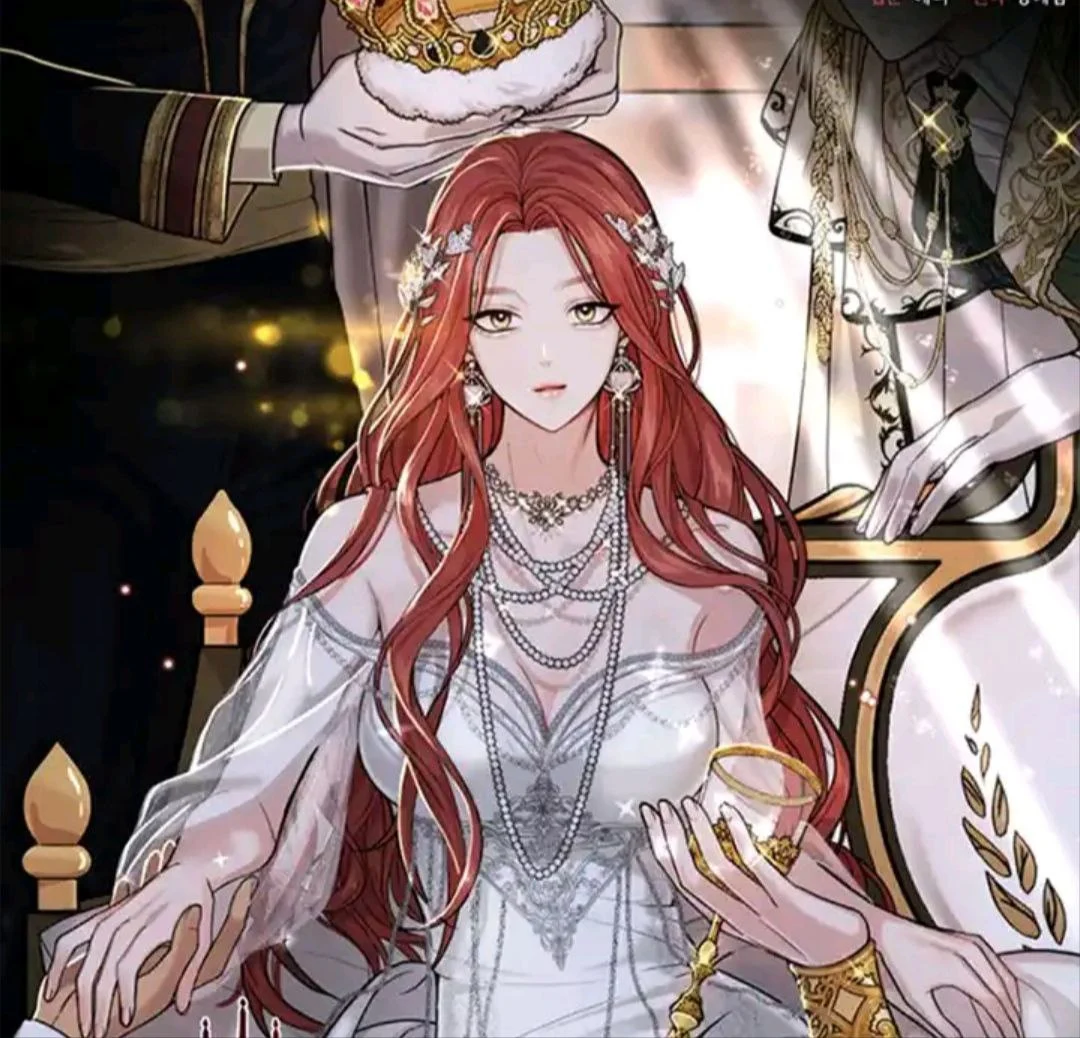
Navier Ellie Trovi
The main protagonist. She is the competent, graceful, and intelligent Empress known for her flawless conduct and unwavering dedication to her duties.
Sovieshu Vict
The Emperor of the Eastern Empire. He is Navier's childhood friend and first husband. He is often driven by a mix of political duty, sentimentality, and a fatal flaw of overlooking his Empress's true value in favor of novelty.
Rashta
The concubine (later Empress) of the Eastern Empire. She is introduced as a runaway slave who is outwardly innocent, childlike, and beautiful, but she possesses underlying ambition, entitlement, and manipulation skills.
Heinrey:
The King of the Western Kingdom. He is Navier's second husband, known for his handsome appearance, playful charm, and devotion to Navier.
The Foundations of a Fated Failure
Before we dive deep into the Emperor’s decision-making process (which is hella dumb), we need to take a breather and go back to the very beginning when our two royals were children.
Despite their privileged lives, Navier and Sovieshu had to work relentlessly to become the figures they are today. Both underwent rigorous training in several areas—such as etiquette, negotiations, and state accounts—in order to uphold their titles and, subsequently, the entire empire. The fact that they prepared themselves alongside each other while also being best friends sealed the deal for their parents, thus making their engagement official.
Although there was an undeniable feeling of companionship between the two—a dynamic that often felt more like a friendship than undying love—many of the townspeople rooted for them. This was because there was no doubt their goals aligned: to rule with dignity, uphold the law, and use all they learned for the benefit of their empire.
I can't seem to pinpoint the exact moment everything started to go downhill, but I strongly suspect the lack of an heir was the beginning of it. Although Sovieshu and Navier had been together since a young age, there were no biological children in sight during their adulthood. Consequently, Sovieshu’s legacy was basically on standby until... he helped a slave, and that slave became his concubine.
Did he help this slave out of the kindness of his heart, or was his motive solely to prove a point? His little experiment, though, would be more costly than he first thought. He didn't only "prove" Navier was infertile; by failing to communicate his worries about succession, he inadvertently destabilized his entire life—even if that were the only true reason he decided to take on a concubine.
Duty vs. Desire: The Emperor's Flawed Choice
Although most of the story takes place in a fantasy-historical setting, we can gather that some of the underlying political rules are based on real-world history. Historically, an emperor’s duty wasn’t only to keep his nation prosperous and safe but to reproduce and provide the nation with male heirs who could uphold his political legacy. Roman, Chinese, Japanese, and Korean empires all required this line of succession, as its absence meant vulnerability and the eventual collapse of the state.
So, did Sovieshu take this slave as a concubine purely to secure an heir? The answer is more nuanced than you might think. While duty played a part, I can prove that it wasn't the only reason, and the proof is in the pudding—or, in this case, in Rashta’s personality.
When there's an opportunity for Rashta to get educated, Sovieshu's first concern is whether said education is going to change her and make her "boring like other royals." Excuse me, sir? The priorities are not prioritizing.
The truth is, Sovieshu was drawn to Rashta because she was a "funny girl with a funny personality." The baby was a bonus that solidified his terrible decision-making. In Sovieshu’s eyes, Rashta is fun; Navier is not fun. This is a simplistic, almost misogynistic way of viewing things because he's missing the entire point: he’s comparing someone prepared to rule a kingdom to someone whose major quality is being pretty and acting childlike.
Trying to Have It All
You would think things ended there, but that would be too simple. Sovieshu is then struck with a "great idea" that would certainly not only secure the future of his unborn child but also legitimize them as his successor. So, he decides to divorce Navier for a little while, you know? Just until his kid can be legitimized. Then after one whole year he'll divorce Rashta and make Navier Empress again.
Yes, of course, a brilliant plan—for an amoeba. The problem with Sovieshu is that he wants to eat the entire banquet and have his cake, too. He wants everything at the same time and is willing to force things in order to make them work. So, I guess you could say he and Rashta have a lot in common: they both demonstrate a profound sense of self-entitlement and a willingness to manipulate circumstances for personal gain.
The Queen of Grace and Intelligence
Which brings me to my queen, Navier, who embodies both pose and grace, layered with profound intelligence. Navier is usually quiet and always in control of her feelings, even if she's dying on the inside. She never liked the idea of Sovieshu having a lover, much less without consulting her first, so when Rashta enters the picture, it destabilizes not only her marriage but also her duties to the entire empire.
Rashta is invasive. She's like a puppy, often whining and crying on steroids, and the way she inserts herself into the narrative feels forceful and alien, almost as if she didn't belong to the story at all. Nevertheless, Navier isn't afraid to put her in her place... elegantly, of course. Navier is a person who needs time to process things, someone who requires gradual progression to establish a connection or a relationship. So when Rashta comes at her like a Nascar car ready to crash, Navier not only cringes away from her but feels the absolute need to separate herself from this stranger.
In her eyes, Rashta is the embodiment of the betrayal Sovieshu was willing to partake in without any consideration for her feelings or thoughts.
Why Navier Had to Stay (Until She Could Leave)
In the grand scheme of things, who could have blamed Navier for staying? Not only did the laws of her own kingdom impose severe limitations on her agency—preventing her from filing for divorce or dismissing the concubine without facing serious consequences herself—but the one person she trusted the most, Emperor Sovieshu, was constantly blaming her for anything bad that happened to him or Rashta. He had put a complete stranger on a pedestal that Navier was barely hanging onto. She was made to feel like she didn’t matter, and that her efforts were never enough.
She was forced to endure this suffering both alone and in silence, almost as if she were deemed a mechanical doll rather than a human being by the Emperor.
I feel for her and the impossible situation she was put in because, in truth, there was nothing she could have done to make things better while remaining within the rigid structure of the Eastern Empire. Her only viable option was to escape from this man who wanted everything and nothing all at once—a man so set on making her the scapegoat for his own disgraces that he fatally failed to see the value in her political utility. An ability everyone else saw and even admired.
Abuse of Power
On that same note, it's crucial to touch on the corrosive power dynamics at play. The laws—or at least the vast majority of them—overwhelmingly benefited the Emperor, not the Empress. Sovieshu, who had full control over everyone in the kingdom, realized at some point that Navier also fit into that category of "controllable subjects."
That realization is why he didn't mind crossing a line that destroyed his Empress emotionally. He did it simply because he could. He knew Navier couldn't do anything more than object or complain, and I suspect he actually enjoyed some of those tense discussions. Finally, Navier, when exposing her suppressed thoughts, wasn't "boring." Yet, even in those moments of genuine distress, he still didn't grant her any dignity or heed her warnings. He was a manipulative idiot wielding absolute authority regardless if he was right or wrong.
Enter Heinrey: A New Beginning
From the get-go, this love triangle was doomed because the close communication that defined Sovieshu and Navier’s childhood friendship faded away to the point it was non-existent.
It's only when Navier begins meeting diplomats who show her consideration and empathy—at a time when Sovieshu turned his back on her—that her eyes finally open. These considerations make her want more and make her realize her time with Sovieshu was done even before the divorce.
Enter Heinrey, the prince of the Western Kingdom. He casually practices magic and can turn himself into a gold bird nicknamed "Queen" by Navier, who doesn't know the truth about said "pet." Heinrey falls almost instantly in love with Navier, not only because of her appearance but because of the way she rules. You could say he loves everything about her, from the tips of her toes to the innards of her intelligent mind—a true king, if I may say so myself.
When Heinrey finally becomes king, he cannot stop thinking about his "Queen," the Empress who would be an asset to his life and his kingdom. Let me be clear: Heinrey wants to be with her because he loves all of her, but he isn't indifferent to Navier's royal qualities that make her a formidable ruler. He also isn't indifferent to the state of the castle or the staff once Rashta comes into the picture. Why is the Emperor paying so much attention to a random girl when he has a capable and beautiful woman by his side he can call his Empress? Heinrey makes it his mission to devote himself to Navier and put her above anyone else, because apparently everyone can smell Rashta's lies except for Sovieshu, who loves his innocent, "party girl."
The Puzzle of Rashta
So, what is Sovieshu missing that most characters and us readers can see, but he isn't? The first impression we get from Rashta is that she's good-looking, she infantilizes herself (often talking in the third person), but she's also noisy, messy, and her presence screams a need for attention far greater than could ever be described.
If she were an ordinary slave, why does she think she deserves everything? We know she was the slave of a high-society family and even had a child with the son of a baron (the child apparently being raised by his biological father). Was her experience somehow different from that of other slaves? It must have been, because her attitude makes me think she was allowed more privileges than the average slave.
The way she acts confounds and intrigues me to no end, making her the perfect embodiment of an oxymoron.
Because although there’s no doubt her ultimate goal is to position herself in power, she still shows some humanity from time to time, usually through her children. We get glimpses of this when she remembers her firstborn and keeps strands of his hair, or when her face falls as she recalls her child.
However, her duality shines once again because although she has moments where she "feels," she can easily cast those feelings aside to get what she wants. She abandons her firstborn simply because she knows the baby can't offer her anything. Her wish for more comes true when she gets pregnant by the Emperor. Her first priority is to secure her fetus's position, not its health or education. She sees other people, even her babies, as pawns to move up the ladder. I wouldn't be surprised if she only wants to secure their position in order to perpetuate her own power.
In the beginning, I saw her as someone willing to do whatever it took to be in that position, but due to her limitations (education), I don't know how far she’s willing to go. Sovieshu has already lost patience with her, almost forcing her to keep studying even when she couldn't anymore. Without Navier, politically speaking, some things are going to change for the worse—at least until Rashta manages to get the handle of everything, and even then, I'm not sure she will be able to measure up.
I'm very intrigued by what will happen when Sovieshu refuses her orders because, after all, just like Navier, even if she’s the Empress, the Emperor has the last word in most matters. Will she eventually see Sovieshu as an enemy instead of a lover, or will she be able to keep up appearances just for her own sake? The comparisons have already started, with Sovieshu pointing out how Navier could do certain things while Rashta is not prepared. Will those frictions eventually be resolved, or will so much friction create a spark that will transform into a fire and burn the entire kingdom? I already know the power-couple that Navier and Heinrey are going to make will be unstoppable.
Final Thoughts on Art and Symbolism
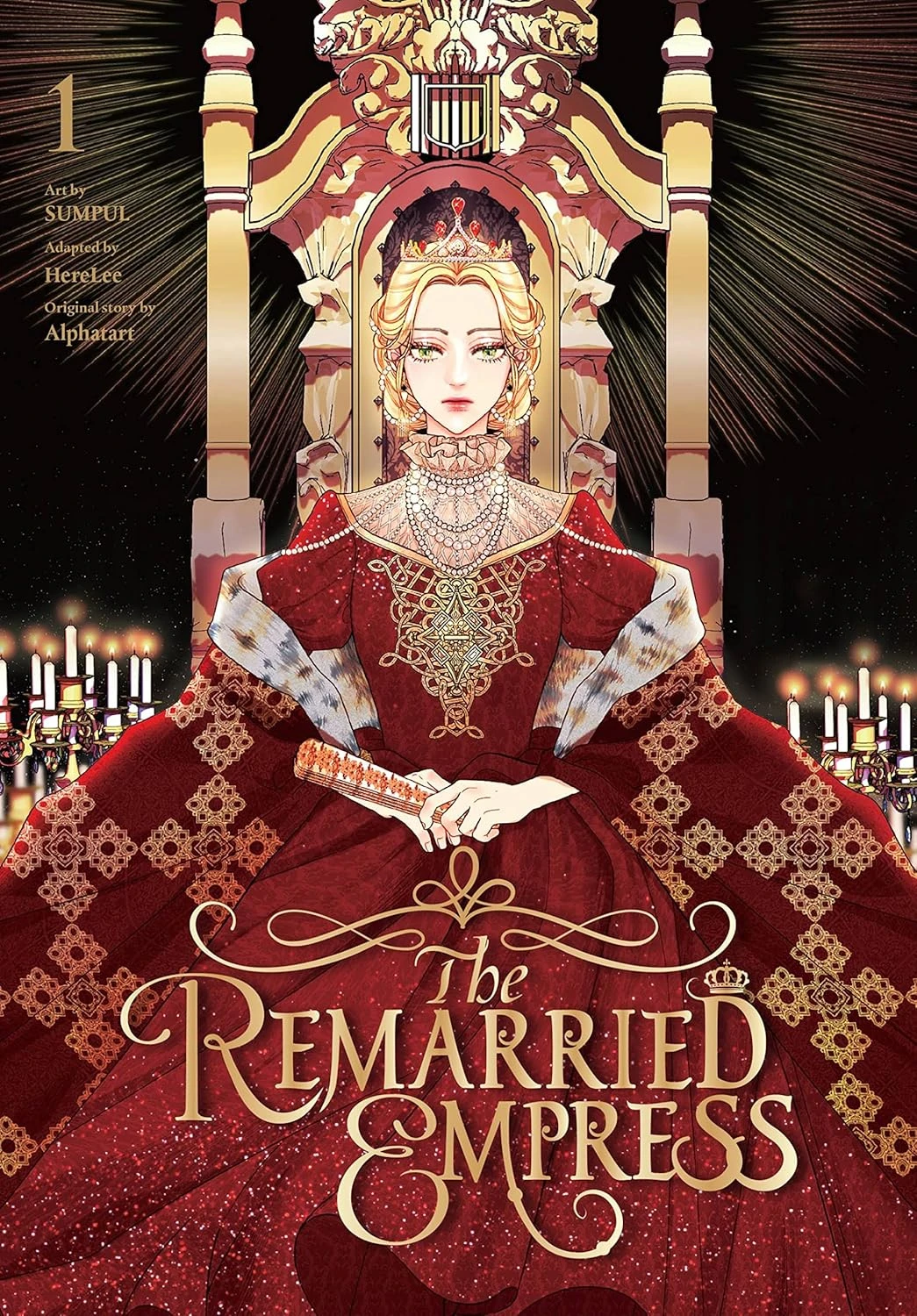
I've got to admit, in the beginning, I wasn't a fan of the art; I thought it was kind of lanky and simplistic. But it's one of those stories where the more you read, the more you like the art and accept it for what it is.
One of the most interesting choices is the use of the color red. In the Eastern Empire, red is used as a war signal, while in the Western Kingdom, it's used as a sign of good luck or good news, and Navier uses a lot of red. I feel like red is her color, maybe the color will keep being significant once she’s able to embrace the Western Kingdom’s culture, which I'm really looking forward to!
And finally, who else thinks Rashta's child is not Sovieshu's? Let’s form an army because I seriously think that’s not his child.